
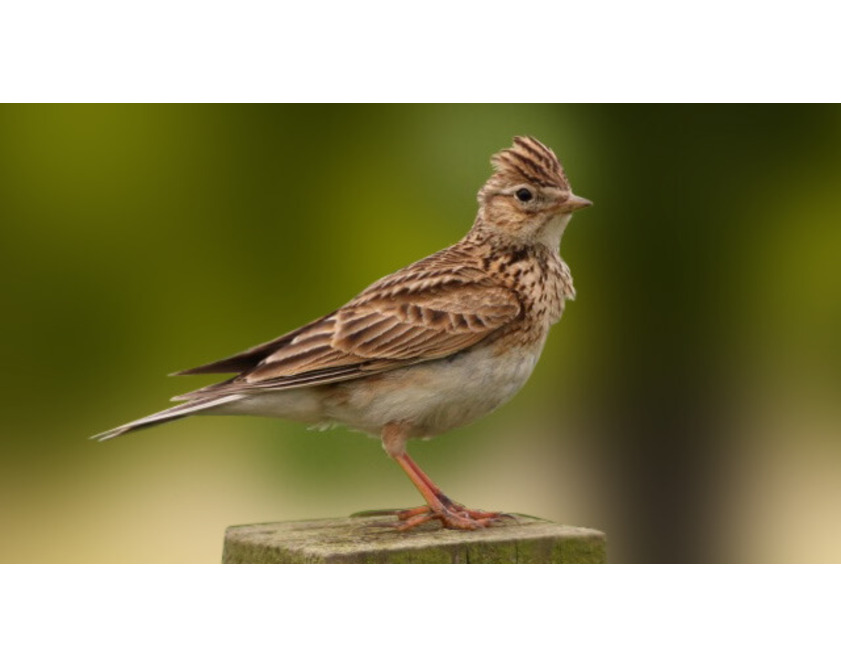
Over the past term I have had the joy of teaching the poetry of Emily Dickinson. As a long-time fan of Apple TV+’s Dickinson (2019-2021), I was thrilled to have an excuse to play Ella Hunt’s performance of ‘Split the Lark‘ as a tool to aid class discussion on the abstract depth of Dickinson’s verse. One way of understanding this poem is as an expression of sexual desire for her sister-in-law, Susan Huntington Gilbert Dickinson. Another reading sees the titular lark as a metaphor for art and the imagination. The more I read the poem, the more I felt that the latter reading resonated with William Wordsworth’s ‘The Tables Turned’ (1798) and Percy Bysshe Shelley’s ‘To a Skylark’ (1820). What follows is my explorative take on the ways that Dickinson’s poem could be interpreted as remodelling and reaction to the Romantic ideas expressed in Wordsworth’s and Shelley’s poems.
Now, just for some context, in my first series of blog posts I considered how the Victorians created what we think of as Romanticism in the twenty-first century. In this series, I’m interested in delving into examples of nineteenth-, twentieth-, and twenty-first-century renderings of Romantic ideas across a range of media: literature, film, art, music etc. (yes, metal music will return). A part of this is to turn away from the idea of a ‘legacy’ (which is used as the title of several books on Romanticism in the c19-21) with its connotations of afterlife and generational inheritance. Instead, I want to think about Romanticism as transformative: ‘Romantic transformations’ implies an ongoing conversation that we are still having with Romanticism, something that is still dynamic and alive rather than static and fossilised. In this sense, I want to move away from a fixed (new) historical approach to the Romantic period and Romanticism and open up discussion about Romanticism as an ingrained part of our day-to-day culture. I hope that through exploring this shift I’m able to think a little more critically about the benefits (and potential problems) it poses.
‘Split the Lark’
As I noted above, Dickinson’s poem has received various interpretations, and this is partially because of the metaphorical layers that the poem carefully constructs and its ambiguous tone (who is ‘you’?). So here is the poem in full:
Split the Lark — and you’ll find the Music —
Bulb after Bulb, in Silver rolled —
Scantily dealt to the Summer Morning
Saved for your Ear when Lutes be old.Loose the Flood — you shall find it patent —
Gush after Gush, reserved for you —
Scarlet Experiment! Sceptic Thomas!
Now, do you doubt that your Bird was true?
There are many excellent close-readings and I have no intention of providing a full breakdown here. Rather, notice how Dickinson opens the poem with the forceful violence of human intellect: “Split the Lark”. It reminds me of J.R.R. Tolkien’s aphorism “To seek for the meaning is to cut open the ball in search of its bounce”. Dickinson’s ambiguous “you” tries to discover the mechanics behind the affective power of art through rational, clinical means but results in the concrete flattening out of art instead. “You” don’t find music inside the lark’s dead body, the sound that once moved “you” is, ironically, no longer possible. Rather, what emerges are the physical, textual constituents of music when it is written and printed: the notes (bulbs). Not music, not sound, but the silent materials that we associate with music.
Dickinson and Shelley
Although Dickinson does not identify the type of lark, I think there is a key parallel that can be drawn between it and Shelley’s skylark. We know that Dickinson read Shelley and heavily annotated a book of his poems, marking ‘To a Skylark’ amongst others. From the opening of Shelley’s poem, the skylark is established as an originator of ideal art:
Hail to thee, blithe Spirit!
Bird thou never wert,
That from Heaven, or near it,
Pourest thy full heart
In profuse strains of unpremeditated art.
Shelley even uses a simile to frame the skylark as his image of the ideal poet:
Like a Poet hidden
In the light of thought,
Singing hymns unbidden,
Till the world is wrought
To sympathy with hopes and fears it heeded not:
Shelley’s Romanticisation of the lark functions as a powerful symbol that I think Dickinson was clearly aware of and, given her reading of Shelley’s verse, incorporated into her poem. ‘To a Skylark’ and ‘Split the Lark’ both frame the bird as a part of the natural world that evades human comprehension. However, the former sees the skylark as surpassing human art and therefore embodying a superior skill the human has yet to master: “teach me”. Shelley’s speaker thinks of itself and the skylark in oppositional terms here, as it desires a transactional relationship with the skylark in order to make the “world […] listen”. As for Dickinson, she seems to partially agree and disagree with Shelley. ‘Split the Lark’ reiterates Shelley’s Romanticised lark as a symbol for the artist and its song as art, but for different means as the poem’s central premise is at odds with the ambition of Shelley’s speaker. Dickinson’s poem fundamentally speaks against humanity prying knowledge from the natural world through physical and intellectual methods. The analyst/dissector acquires no new knowledge from the violence enacted on the lark and if we read ‘To a Skylark’ through the lens of ‘Split the Lark’, we can build an impression that Shelley’s speaker will never obtain the poetic abilities it desires.
Dickinson and Wordsworth
As for Wordsworth, this is the stanza I’m interested in from ‘The Tables Turned’:
Sweet is the lore which Nature brings;
Our meddling intellect
Mis-shapes the beauteous forms of things:—
We murder to dissect.
Here Wordsworth vilifies “intellect”, in opposition to the imagination, as something that distorts beauty and nature through a reductive lens into unrecognisable, cold, dead forms. Earlier in the poem, he calls for the reader to leave their “books” (human reason and its reductive ability) and listen instead to the linnet and thrush (“throstle”) who can inspire and impart wisdom through oral song. The transitional quality of this natural wisdom is suggested through Nature’s “lore”, implying a body of foundational ideas that can be passed on and developed. Human intellect and reason, as opposed to the imagination that stems from the natural world, “Mis-shapes” this lore and removes the human from the natural world. The result is that the living world is conceptually “murder[ed]” by books (Wordsworth is here thinking of Enlightenment worldviews of the seventeenth and eighteenth centuries) that reduce flora, fauna, stone, the earth, water, and air to soulless, inanimate objects.
So how is Dickinson riffing on Wordsworth? As with Shelley, we know that Dickinson read Wordsworth and responded to his poetry through allusions and intertextual references. I think there are two links, the first is the declarative “murder to dissect” which can be read as a thematic precursor to Dickinson’s poem, and the second is the function of the environment. ‘Split the Lark’ visualises Wordsworth’s dictum and calls for “you” to physically lay your hands on the bird to enact the murder. But while Wordsworth is initially criticising the dissection and consequential reduction of nature, Dickinson goes further to entangle the human with nature. The bird’s song is a symbol for human art and through this link Dickinson is implying that art is as much a natural form of expression to us as song is to the lark. To “split” our own art is thus self-destructive as we annihilate our very being.
As for the broader role of the environment, I think Wordsworth envisions it (“Nature”) in ‘The Tables Turned’ as a spiritual entity (recalling the “spirit in the woods” of ‘Nutting’) willing to open itself up to and interact with the human: “She has a world of ready wealth, / Our minds and hearts to bless—”. Wordsworth’s “Nature” has agency in order to “bless” the human with its “ready wealth” of wisdom. The implication here is that humanity can (1) truly comprehend the mysterious depths of the natural world and (2) “Nature” is the taproot of this wisdom. Dickinson doesn’t appear to fully align herself with Wordsworth, the murder of the lark proves the antithesis to the acquisition of knowledge as the image of the “Flood” and “Gush after Gush” indicates that “you” cannot contain or control let alone understand something as small but as symbolically potent and multivalent as the lark. While Wordsworth positions the human as an inheritor of Nature’s blessing and wisdom, Dickinson resists privileging humanity above the rest of the natural world. Furthermore, she refuses to raise the imagination above the natural world, instead preferring to entangle it through symbolic comparisons with the lark.
While Shelley isn’t the only Romantic writer to have equated birds with art and the imagination, this post wanted to explore some initial, tentative connections without providing a thoroughly detailed close-reading of what may be considered Romanticism’s ornithological imagination. In both short critical comparisons provided above, it becomes apparent that Dickinson’s poem transforms Romantic ideas found in Wordsworth’s and Shelley’s poetry. While ‘Split the Lark’ embraces and builds on inherent ideas about the connection between human art and the natural world, it also resists the Romantic inclination to ‘learn’ and ‘master’ qualities of “Nature”. Indeed, the deliberately abstract quality of Dickinson’s writing allows for its central critique to be applicably raised against the desires that Wordsworth and Shelley espouse in their poetry.

 Will Sherwood
Leave a comment