
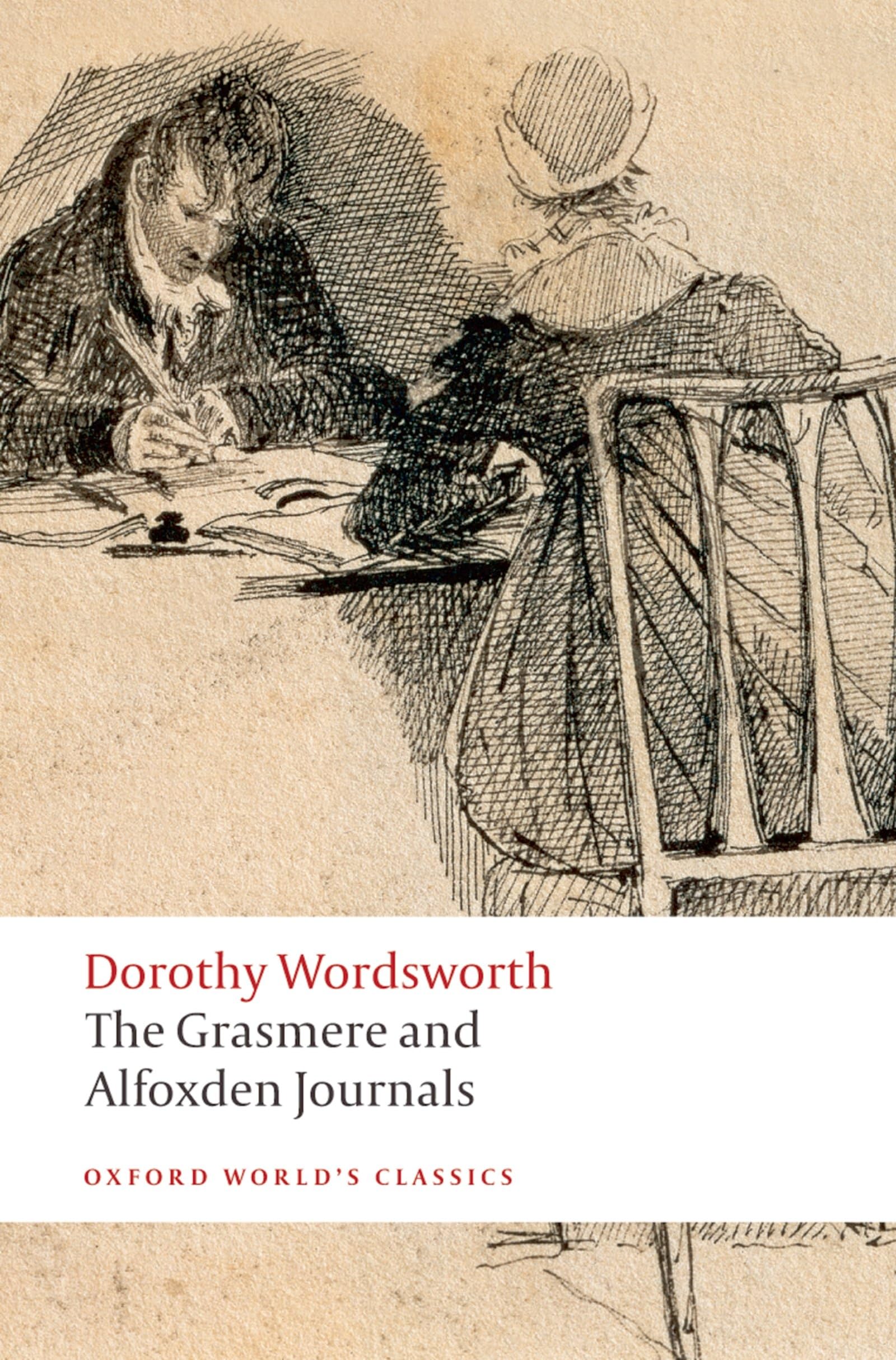
I have been enthralled by the writings of Dorothy Wordsworth ever since I first read her Grasmere and Alfoxden Journals (G&A) (1798-1803).1 In Recovering Dorothy: The Hidden Life of Dorothy Wordsworth (2021), Polly Atkin illuminates the “many Dorothies” that have been over-shadowed and marginalised by the continued study of her brother, William Wordsworth (25). An example of this is the cover of the Oxford World’s Classics’ G&A (below): Man and Woman Writing at a Table (1805) by John Harden. The woman sits with her back to the audience and her face hidden (erasing her identity) while the man’s concentrated countenance is illuminated, framing him as a serious writer. The use this image (which, when I first saw it, I thought depicted William and Dorothy!) counteracts the ambition of the publication to celebrate Dorothy’s writings on their own terms.
While G&A probably remains the most widely consumed piece of writing by Dorothy, the editorial efforts of Ernest de Sélincourt in the first half of the twentieth century to more recent editions by Pamela Woof, Michelle Levy, Nicholas Mason and Susanne Sutton, and Jessica Fay continue to complicate and nuance how we understanding Dorothy’s kaleidoscopic life.2 My ambition with this series of blog posts is to contribute to this critical interest in Dorothy’s writing by examining the function of trees in her journals, travel diaries, poetry, and letters. The blog series will gravitate around four questions:
- How does Dorothy see, engage with, and imagine the bodies and lives of trees?
- How do trees contribute to her understanding and construction of place?
- How do her writings interact with and respond to the political discourses and events of the time?
- To what degree do trees come to symbolise her own body and experiences?
The aim of these posts is to trial run my ideas and see what does and does not work—feedback is always welcome!—as the final outcome will, hopefully, be a journal article or book chapter. They will not contain all my thoughts or else each post may end up at chapter length! In light of reading Robin Wall Kimmerer’s Braiding Sweetgrass: Indigenous Wisdom, Scientific Knowledge and the Teachings of Plants (2013), I follow in her example and break with grammatical rules (capitalisation) that elevate the human above other beings (flora). I will thus use capitals to write freely of florae as persons (Birch, Oak, Pine etc.) (385).
It is delightful to see a steady growth in book-length studies on literary tree culture, with several focussing on the Romantic period. Peter Dale and Brandon C. Yen’s Versed in Living-Nature: Wordsworth’s Trees (2022) in particular achieves an insightful examination of the role of trees in William’s life and writings. However, the book’s opening description of William as a “trailblazer”, because of his “respect for trees” (Dale and Yen 2022: 9), feels a little off given his and Dorothy’s collective arboreal experiences, one example being their “precious shared memories” of Brothers’ Wood in the Lake District that was felled for a new road in 1831 (Newlyn 2013: xiv; emphasis mine).3 As Dale and Yen’s book attests, trees are abundant across William’s works and held significant meaning for him. These blog posts inquire into the meaning they housed for Dorothy and how she may be equally considered a trailblazer.
I – The Silvicultural Tradition and Picturesque
Anna Burton has conceived of an ongoing “silvicultural tradition” as a “web of writings about trees that are enmeshed in their constant cross-referencing and borrowing from one another” (2021: 2). The ecological language of “web” and “enmeshed” speaks to the interconnectedness of trees that is an important aspect of Indigenous and First Nation worldviews and has been corroborated by Suzanne Simard’s ground-breaking research into the mycorrhizal fungal network (See Jones et. all 1997, and Simard 2021: 5). Also, the “mesh” of Burton’s “enmeshed” may be a possibly (un)conscious nod to Timothy Morton’s suggestion that we use “mesh” to replace the technologically-coded, and therefore compromised, “network” (2010: 28). What begins to emerge here is a critical ecological diction where scholarship replicates the very figurative language it is trying to parse and analyse. To paraphrase Nick Groom on the Gothic, contemporary ecocritical theory is effectively ecological writing (2012: xiv). I do not have an answer to this right now (maybe someone has already offered one?), but it is worth thinking about how we employ language when we write about ecological subjects.
Burton anchors her study in the picturesque theory of William Gilpin whose two-volume Remarks on Forest Scenery and Other Woodland Views (1794) provided artisans of the time with a toolkit of how to frame and rearrange trees and their surrounding landscape. A great way to think about the picturesque is through modern digital editing technologies with their ability to alter, add, and remove parts of an image until a more harmonious or eerie vision of the world is rendered—this is essentially Gilpin’s legacy in the twenty-first century. Dorothy’s work with the picturesque has garnered a substantial body of critical attention from John R. Nabholtz in 1964 to Nigel Leask in 2020, and given that Forest Scenery was published before she began her Alfoxden journal in 1798, it is likely that it informed how she wrote about trees. If this is the case then Dorothy’s harnessing of Gilpin’s ideas would place her firmly within Burton’s silvicultural tradition, bringing her writing into conversation with the broader literary arboreal tradition of the time.
II – Picturesque Trees and Ruins
Written before the Grasmere journal (1800-1803), Dorothy’s Alfoxden journal (1798) features a series of more intensively descriptive passages about trees. Two in particular stand out for their linkage to ruins.
| 20 January 1798: “Upon the highest ridge of that round hill covered with planted oaks, the shafts of the trees show in the light like the columns of a ruin.” (G&A: 141) |
| 15 April 1798: “Quaint waterfalls about, where Nature was very successfully striving to make beautiful what art had deformed—ruins, hermitages, &c., &c. In spite of all these things, the dell romantic and beautiful, though everywhere planted with unnaturalised trees. Happily we cannot shape the huge hills, or carve out the valleys according to our fancy.” (152) |
The tones are strikingly different, as are the locations: the first is Alfoxden while the second is Crowcombe, Somerset. The Oak from 20 January is ascribed a Gothic, picturesque aesthetic that implies a sense of loss.4 Written in winter, the image is fragmentary as the Oak is leafless and like a ruin, missing the element that makes it ‘whole’. However, it is precisely the absent trait of the ruin that the picturesque found so appealing. Dorothy appears to draw on this tradition in a positive sense to symbolise the Oak’s partial form. On the other hand, the 15 April entry paints the picturesque negatively, with “unnaturalised trees” (non-native) reinforcing the artificiality of Crowcombe Court. The picturesque project of John Bernard in the 1770s may be “romantic and beautiful”, but Dorothy’s “liking for native plants and trees” underpins her “unnaturalised” description, suggesting that she may have held an exclusionary opinion as to what florae was appropriate for an English court, and that she found Crowcombe’s to be invasive (Woof in G&A: 297). Instead, she finds comfort in Nature “successfully striving” to overcome humanity’s marks (“art”) on the land, closing with a notion that strikes a rather chilling note for the twenty-first-century reader: “we cannot shape the huge hills, or carve out the valleys according to our fancy.” Dorothy spoke too soon. The non-native trees of Crowcombe Court are affiliated with ruins negatively, rejecting them as an extension of the picturesque “art” that stirs in Dorothy relief that humanity, in 1798, cannot curate the Earth itself.
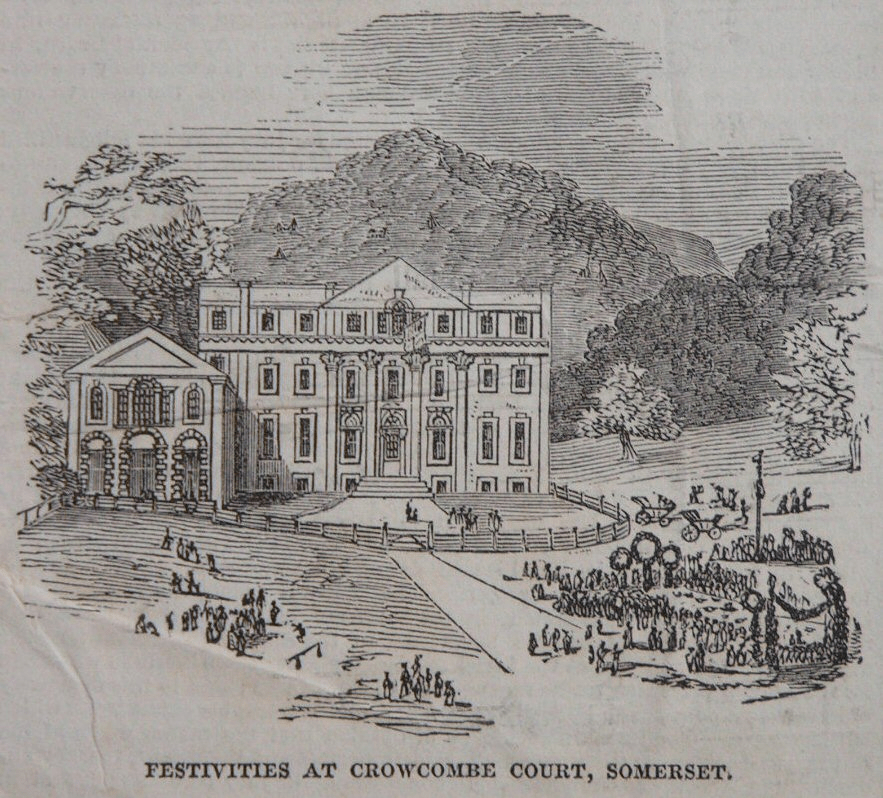
Figure 1 – ‘Festivities at Crowcombe Court, Somerset’ (1851), on wood. Artist unknown.
III – “I sate under the trees”
A consistent and important part of Dorothy’s day-to-day life in Grasmere was the orchard. She frequently documents sitting “under the trees” and often “in the orchard” (4, 19, etc.). Even at Alfoxden and when she is away from home she notes sitting under trees such as Hollies, Oaks, and Firs (89, 105, 141, 149). This takes up anywhere from one hour (98) to a whole morning (87), afternoon (19), evening (88), or the whole day (83). She is sometimes accompanied by William (14, 102), or their friend Samuel Taylor Coleridge (101), but mostly she sits in solitude. A common time for Dorothy to venture into the orchard is the period between dinner and tea. Whether this time is filled with an activity is not always commented on, although sometimes she will read and write (22). It seems as if she gained immense peace and pleasure by her intimacy with trees.
The entry for 6 May 1802 stands out as it is written in the present, rather than the more common past, tense: “here we are sitting in the orchard” (96). The passage that follows is deeply sensory, with Dorothy flitting between what she can hear and see:
The small Birds are singing—Lambs bleating, Cuckow calling—The Thrush sings by Fits, Thomas Ashburner’s axe is going quietly (without passion) in the orchard—Hens are cackling, Flies humming, the women talking together at their doors—Plumb & pear trees are in Blossom, apple trees greenish—the opposite woods green, the crows are cawing. We have heard Ravens. The Ash Trees are in blossom, Birds flying all about us. The stitchwort is coming out, there is one budding Lychnis. The primroses are passing their prime. Celandine violets & wood sorrel for ever more—little geranium & pansies on the wall. (96)
Sitting under and near trees affords Dorothy the best vantage point to be an audience to the natural world. The constant em dashes in this passage and the attentive flurry of present tense verbs conjures the impression of an overlapping but delightful symphony composed by her multispecies neighbourhood. Dorothy’s botanical eye charts the floral specimens of the orchard. She is less interested in colour (“green”), as her attention is instead on the life-stages of the flowers (“coming out”, “budding”, “passing”). The passage depicts Dorothy’s sensory attunement to her environment, the inclusion of the human in the natural world, and notes the rather un-Romanticised sound of Ashburner’s axe “without passion” in the orchard. To sit under or near trees was one of Dorothy’s favourite afternoon activities, it enabled her to think, read, write, and observe, sometimes inspiring her write in real time.
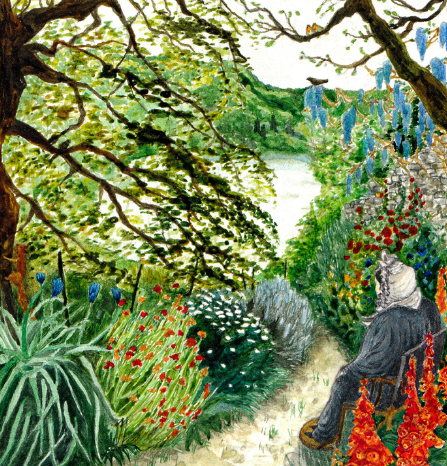
Figure 2 – Illustration for Recovering Dorothy (2021) by Isobelle Cochrane.
IV – “our favorite Birch tree”
Dorothy’s description of her favourite Birch tree on 24 November 1801 has received some attention within studies that focus on other aspects of her journal writing. Susan M. Levine reads Dorothy’s isolated depiction of the Birch as a mirror of “her position as a solitary woman seeking definition from those around her”; while Newlyn and Woof respectively identify the experience as one of “spiritual awakening” with “something of divinity about it”; and through Lisa Vargo’s thought-provoking rewilding lens the Birch acquires a “sense of self as a birch, representing a form of resilient economy” (Levin 1987: 20; Newlyn 2007: 338 and 2013: 145; Woof 2017: 174; Vargo 2021: 362). It is worth quoting the passage from Dorothy’s journal in full before considering how she constructs her experience of the Birch:
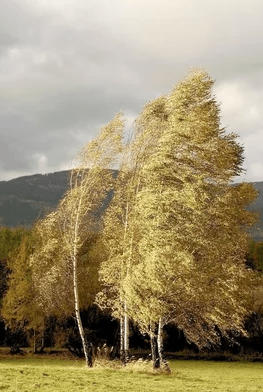
as we were going along we were stopped at once, at the distance perhaps of 50 yards from our favorite Birch tree it was yielding to the gusty wind with all its tender twigs, the sun shone upon it & it glanced in the wind like a flying sunshiny shower—it was a tree in shape with stem & branches but it was like a Spirit of water—The sun went in & it resumed its purplish appearance the twigs still yielding to the wind but not so visibly to us. The other Birch trees that were near it looked bright & chearful—but it was a Creature by its own self among them. (G&A: 40)
The passage is strikingly empirical and visual, with its attention on the birch’s mobility acting as the keystone for its evolving description. It begins by observing the tree “yielding to the gusty wind”, before shifting to a figurative lens with two similes. The first begins to draw an affiliation between the tree and rain with “sunshiny shower”, and the second secures the aquatic association. The em dashes interrupt the flow of the sentence, reflecting the spontaneity of Dorothy’s perception of the tree. But her parenthetical phrase also characterises the intensity of her gaze as she sees into the birch’s additional reality.
Newlyn understands Dorothy’s similes in G&A as marking her as a “self-conscious writer using a poetic register” (2007: 330). Indeed, it is Dorothy’s poetic diction that supports her exploration of natural world’s symbiotic mesh, drawing associations and analogies between natural objects to fix her writing in the familiar rather than the unfamiliar or mystical (Levine 1987: 33; Newlyn 2007: 339-40). Newlyn terms this Dorothy’s “‘re-familiarisation’ rather than ‘defamiliarisation’” as most, if not all, of her poetic expressions in G&A are rooted in the natural phenomena of the Lake District (2007: 342). This ‘grounded’ lens on Dorothy’s writing is useful as it highlights the significant impact the Lakes had on her imagination, but it also restricts her ability to imagine beyond her home. It should not be forgotten that her reading about and travels in the wider world informed her writings—some she intended to publish! The metaphysical meaning Dorothy ascribes the Birch in the passage quoted above implies her familiarity with the tree’s broader folkloric associations in northern England, Scotland, and Europe. Dale and Yen comment that Dorothy was most likely aware of the traditional ballad ‘The Wife of Usher’s Well’ in which the Birch grows at the “gates o’ paradise”, depicting the tree as one that grows in worlds both natural and supernatural, known and unknown, the every day and divine (2022: 93. See also Stafford 2017: 173-4). Given that Walter Scott also published an incomplete version of the ballad in his Minstrelsy of the Scottish Border (1802), it may be argued that the Birch in the Romantic period was a liminal arboreal figure that straddled the border between life and death. I propose that Dorothy was one such Romantic writer who tapped into the Birch’s folkloric history to inform the development of her poetic register.
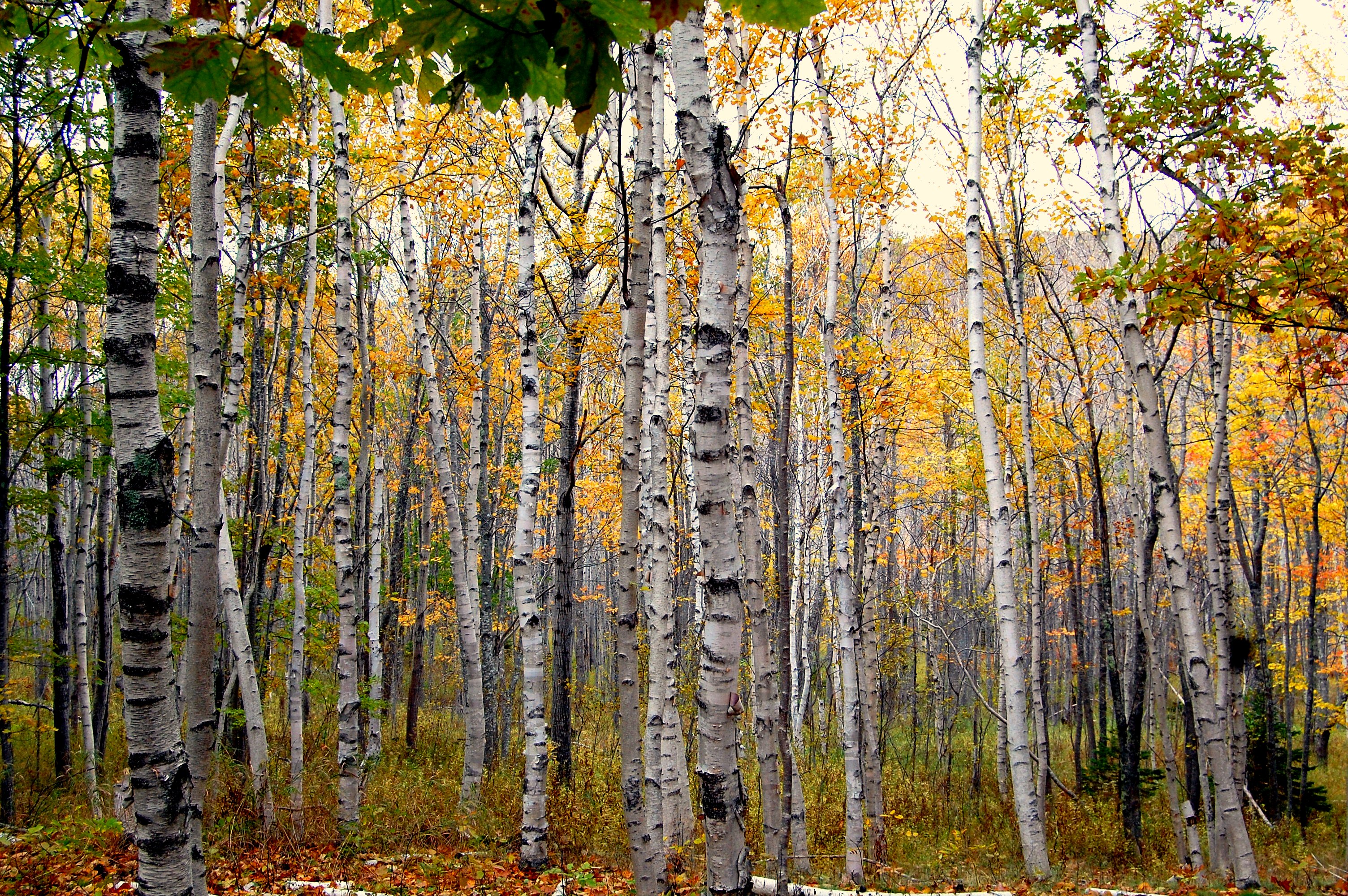
While researching this blog post, I was struck by the number of times Dorothy writes figuratively about trees. Alder, Fir, Holly, and Yew receive tangible, visual descriptions, with a strong focus on the colour of the leaves and bark, but nothing metaphysical. An Ash has “glittering spears”, the shafts of an Oak are like “columns of a ruin”, and a Hawthorn “glitter[s] with millions of diamond drops” (G&A: 47, 141, 143). But it is the Birch that Dorothy appears to find the most creatively versatile as it is poeticised on three occasions (40, 97, 133). The entry quoted above gestures to the numinous, documenting a moment where the Sun’s light illuminates the Birch’s otherworldly, semi-divine quality as a “Spirit of water”. I disagree with Newlyn, Dale and Yen as the Birch does not appear to “transfigure” or “renounce its materiality [and] transform” as much as its additional reality is briefly apprehended and recorded by Dorothy (2013: 145; 2022: 93). It is still a “tree in shape” but its folkloric liminality encourages Dorothy to glimpse through its materiality for a brief moment. While capitals are not consistent across G&A, their usage on “Spirit” and “Creature” on this occasion seem to indicate her recognition and respect of the Birch’s personhood and numinous quality. This is corroborated by nine of the twelve mentions of Birch in G&A being capitalised, sometimes in passages where other tree species are not, such as “Birches, ashes, […] hawthorn […] oak” (87). While other trees do receive sporadic capitalisation, this is nowhere near as consistent as the Birch. The Birch thus appears to hold special purchase for Dorothy. Besides the fact that she and William were particularly fond of native florae, it was the Birch, with its characteristic pliability and transparency, which afforded her the creative scope to experiment with poetic diction in her journals (See Woof in G&A: 297, and Dale and Yen 2022: 90).
On another occasion when Dorothy poeticises the Birch tree, she is again concerned with the tree’s mobility: “It bent to the breezes as if for the love of its own delightful motions” (G&A: 97). Here Dorothy’s simile personifies the Birch, imagining the tree as deriving pleasure from its spontaneous movements in the wind. The register is playful, imbuing the Birch with agency and a sense of self (recalling Vargo above) as it bends “as if for the love of its own delightful motions”, implying that it is capitalising on the wind’s power for its own joyful gain.
The third poetic depiction of the Birch is more concerned with its place within a vaster landscape:
The lake was perfectly still, the Sun shone on Hill & vale, the distant Birch trees looked like large golden Flowers—nothing else in colour was distinct & separate but all the beautiful colours seemed to be melted into one another, & joined together in one mass so that there were no differences though an endless variety when one tried to find it out. (133)
Dorothy’s impressionistic eye elevates the beautiful dimensions of the trees by comparing them to “large golden Flowers”. Dale and Yen have commented on Dorothy connecting with Birch “trees metaphysically, but also almost physically”, recalling Levine’s biographical links between Dorothy and her favourite Birch above (2022: 93). The Birch in G&A has a polymorphic quality, characterising the tree’s form and aesthetic as fluid and malleable to the human eye and imagination. This makes the tree stand out in busy landscapes to Dorothy, as it does in the entry quoted above. Here they are small but strikingly “distinct” with their “golden” pigment raising them above the kaleidoscopic “mass” of unassigned, “melted” colours.
V – Unearthly Arboreal Bodies
There are other entries in G&A when Dorothy characterises trees and woods as otherworldly.
| 17 February 1798: “A deep stillness in the thickest part of the wood, undisturbed except by the occasional dropping of the snow from the holly boughs; no other sound but that of the water, and the slender notes of a redbreast, which sang at intervals on the outskirts of the southern side of the wood. There the bright green moss was bare at the roots of the trees, and the little birds were upon it. The whole appearance of the wood was enchanting; and each tree, taken singly, was beautiful. The branches of the hollies pendent with their white burden, but still showing their bright red berries, and their glossy green leaves. The bare branches of the oaks thickened by the snow.” (146) |
| 14 May 1802: “The woods looked miserable, the coppices green as grass which looked quite unnatural & they seemed half shrivelled up as if they shrunk from the air. O thought I! what a beautiful thing God has made winter to be by stripping the trees & letting us see their shapes & forms.” (99) |
| 14 July 1802: “the sun shone chearfully & a glorious ride we had over Gaterly Moor. Every Building was bathed in golden light—The trees were more bright than earthly trees” (120) |
The first entry is a part of the more detailed Alfoxden journal while the other two are from the Grasmere journal. The difference is apparent in the quantity of space Dorothy devotes to documenting her experiences with arboreal spaces. In all three entries trees are extra ordinary to varying degrees. In the first entry the wood is “enchanting”, with its musical etymology from the Latin incantare meaning ‘to put under a spell’/’to sing’; in the second the fractal “shapes & forms” of the trees that have not been coppiced invoke the Christian God’s divine plan as art; and in the final entry the sunlit trees radiate unearthly light, again tying the arboreal to the divine.
These entries perhaps represent Dorothy at her most attentive and empirical. She observes the uniqueness of “each tree” and delights in subtly blending the sight of holly leaves and branches that droop with the weighty “burden” of snow. The reference to winter at the peak of spring in the second entry may initially feel out of place, but Dorothy records that on 14 May 1802 they experienced “hail & snow showers all day”, evoking wintery conditions and setting the stage for her to think retrospectively (99). She frames spiritual meaning in an anatomical register as she details winter “stripping” deciduous trees of their foliage, revealing their underlying “shapes & forms”. As I noted in section five, Dorothy appears to be intrigued by the arboreal body and through her writing she (re)fashions the form and personality of trees she encounters.
VI – Some Early Conclusions
Dorothy’s G&A offers some initial insight into the relationship she had with trees. It were not fixed, as separate entries indicate that trees were of multivalent value to her. G&A documents the aesthetic, ecological, ethical, national, and poetic role of trees, evincing their personal significance to Dorothy. The characteristically slow growth of trees is perhaps echoed in Dorothy’s writing. It is in proximity to trees that her empirical writing is able to gestate into vivid and complex observations and insights of the world.
She seems to have also been particularly interested in the polymorphic quality of arboreal bodies, such as the shifting nature of deciduous trees like the Birch, and on multiple occasions recorded them as sites of divine apprehension. Moreover, her writing displays an ethical attitude to arboreal bodies as individual persons, calling her favourite Birch a “Creature by its own self” and singling out every tree in her 17 February 1798 entry as beautiful. This worldview is not consistently expressed across G&A, and her apparent distaste of non-native flora should not be overlooked. But Dorothy can display a sensitivity to and awareness of the personhood of florae.5 As I noted on her entry from 6 May 1802, she can also exhibit an investment in inclusivity, blending the voices of various species (human and not) into one symphony. I am especially interested to see if this apprehensiveness is a more holistic characteristic of Dorothy’s writing! G&A showcases that Dorothy’s valued trees as much as she did flowers, and it will be the role of the next blog post to consider how her localised writings about Cumbria and Somerset compare to those in her Recollections of a Tour Made in Scotland (1803).
Bibliography
Aitkin, Polly. 2021. Recovering Dorothy: The Hidden Life of Dorothy Wordsworth (Salford: Saraband).
Burton, Anna. 2021. Trees in Nineteenth-Century English Fiction: The Silvicultural Novel (London: Routledge).
Gilpin, William. 1794. Remarks on Forest Scenery and Other Woodland Views
(Relative Chiefly to Picturesque Beauty) Illustrated by the Scenes of New-Forest in Hampshire (2 vols) (London: R. Blamire).
Groom, Nick. 2012. The Gothic: A Very Short Introduction (Oxford: Oxford University Press).
Jones, M.D., Durall, D.M., Harniman, S.M.K., Classen, D.C., Simard, S.W. 1997. ‘Ectomycorrhizal diversity on Betula papyrifera and Pseudotsuga menziesii seedlings grown in the greenhouse or outplanted in single-species and mixed plots in southern British Columbia’, Canadian Journal of Forest Research, 27, pp. 1872-1889.
Kimmerer, Robin Wall. 2013. Braiding Sweetgrass: Indigenous Wisdom, Scientific Knowledge and the Teachings of Plants (London: Penguin).
Leask, Nigel. 2020. Stepping Westward: Writing the Highland Tour c.1720–1830 (Oxford: Oxford University Press).
Levin, Susan M. 1987. Dorothy Wordsworth and Romanticism (London: Rutgers).
Morton, Timothy. 2010. The Ecological Thought (Cambridge: Harvard University Press).
Nabholtz, John R.. 1964. ‘Dorothy Wordsworth and the Picturesque’, Studies in Romanticism, 3 (2), pp. 118-128.
Newlyn, Lucy. 2007. ‘Dorothy Wordsworth’s Experimental Style’, Essays in Criticism, 57 (4), pp. 325-349.
— 2013. William and Dorothy Wordsworth: ‘All in Each Other’ (Oxford: Oxford University Press).
Simard, Suzanne. 2021. Finding the Mother Tree: Uncovering the Wisdom and Intelligence of the Forest (Dublin: Penguin).
Stafford, Fiona. 2017. The Long, Long Life of Trees (London: Yale University Press).
Vargo, Lisa. 2021. ‘The Rewilding of Dorothy Wordsworth’, The Wordsworth Circle, 52 (3), pp. 358-367.
Woof, Pamela. 2017. ‘Dorothy Wordsworth, Journals‘, in A Companion to Romanticism, ed. by Duncan Wu (Oxford: Blackwell), pp. 169-182.
Wordsworth, Dorothy. 2002. The Grasmere and Alfoxden Journals, ed. by Pamela Woof (Oxford: Oxford University Press).
Footnotes
- I am grateful to Brenna Cameron Lopes, who read an early version of this post and helped to develop a couple of ideas. ↩︎
- Ernest de Sélincourt: Journals of Dorothy Wordsworth (1933), The Letters of William and Dorothy Wordsworth (6 vols) (1935–1939), Recollections of a Tour Made in Scotland (1941). Pamela Woof: The Grasmere and Alfoxden Journals (2002). Michelle Levy: Dorothy Wordsworth’s Lake District: Poems from the Commonplace Book (2024). Nicholas Mason and Susanne Sutton: Dorothy Wordsworth’s Rydal Journals (2025). Jessica Fay: The Poetry of Dorothy Wordsworth: The Cambridge Collected Edition (forthcoming). ↩︎
- For more on Brothers’ Wood, see Woof in G&A: 246. ↩︎
- Newlyn has suggested that Dorothy’s tone at times leans towards the Gothic diction of Samuel Taylor Coleridge, with an Oak looking like a “ruin”, Ivy growing “like bristled serpents”, and boughs “stiff and erect like black skeletons” (2007: 330; G&A: 141-2). ↩︎
- I do not purport that Dorothy shares the same worldview as Indigenous and First Nation peoples. Her strong Christian worldview certainly influenced how she conceived of the world and her relationship to it! But her apprehension of floral personhoods and capitalisation of species reminds me of Robin Wall Kimmerer’s ‘A Note on the Treatment of Plant Names’ that I referenced at the start of this post: “Indigenous ways of understanding recognize the personhood of all beings as equally important, not in a hierarchy but a circle. […] I break with those grammatical blinders to write freely of Maple, Heron, and Wally when I mean a person, human or not; and of maple, heron, and human when I mean a category or concept” (2013: 385). ↩︎

 Will Sherwood
Leave a comment